




This isn’t a guide and it’s not a promotion. It’s just an honest record of what happened when I started copy trading on Bitget with 150 USDT — including the parts that didn’t go well.
If you’re thinking about starting small, not looking to get rich quick, and just want to see idle money do something — this might be useful to read first.
Starting with 150 USDT
Why I started
Honestly, nothing dramatic. I had 150 USDT sitting around doing nothing and thought I’d see what copy trading was about. The goal was simple: start small, see some kind of result, don’t overthink it. Not trying to turn it into a full income — just wanted to see if idle money could quietly grow.
I used Bitget’s Smart Copy mode because you just set an investment amount and it handles everything proportionally. For someone with no trading background, the barrier to entry is genuinely low.
The First Two Traders: -41.06 USDT
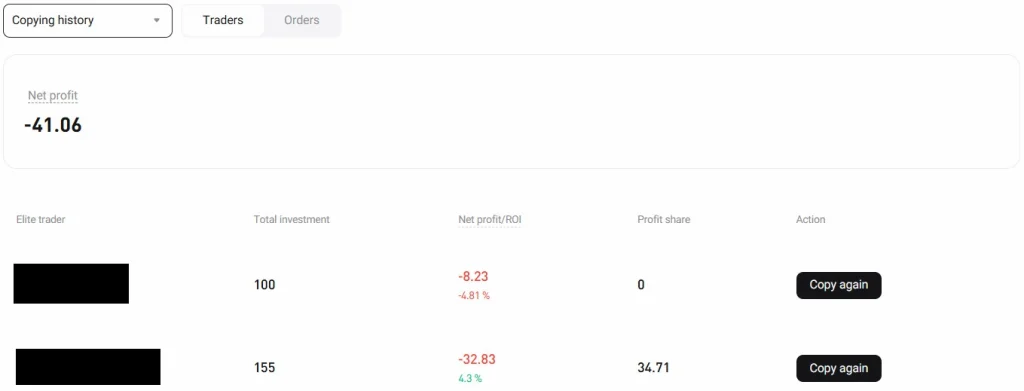
The first two traders I copied both ended in losses. Combined: -41.06 USDT.
Failure #1: Followed a recommendation without a real reason
The first trader came up in Bitget’s daily recommendations. I put in 155 USDT. The first few days looked fine — ROI was climbing, seemed like it was working. Then it started drifting down. I kept thinking “give it a bit more time, it’ll recover.” It didn’t. I stopped at -32.83 USDT.
Looking back, my reason for choosing this trader was basically “it showed up in recommendations and looked okay.” I hadn’t thought through what I actually wanted from a trader — that was the real problem.
Failure #2: Trusted experience over fit
The second trader had a detailed profile. Over 9 years in crypto, openly using a Martingale strategy, operating with $10,000–$20,000 base capital, taking profits around 30%. The profile was thorough and the track record looked solid.
I knew what Martingale was. The risk is built into the strategy — it works until there’s a sustained one-directional move, at which point the losses compound. But nine years of experience felt like it meant the risk was managed. I went in with 100 USDT. Ended at -8.23 USDT.
The honest assessment: the strategy itself wasn’t wrong for the right person — it’s designed for large capital, long holding periods, and the patience to ride out drawdowns. That’s the opposite of what I was doing: small amount, short timeframe, wanting to see progress. The mismatch was mine to own.
The common thread in both failures: I chose traders before figuring out what kind of copy trading I actually wanted to do. Both times I ended up copying someone whose approach was fundamentally out of sync with my own goals.
The One Thing I Changed After Losing
Clarifying what I actually wanted first
After the two losses I stopped and asked myself: what am I actually trying to do with this money?
The answer was simple. No big returns, no long lockups. Just let a small amount grow steadily in a way I can see. That immediately ruled out large-capital, long-term traders — which is exactly what I’d been copying.
Once that was clear, choosing traders became much more straightforward. Not looking for the highest historical return. Looking for a trading style that actually matches what I’m trying to do.
What I’m Doing Now: Two Types Running Together
Short-term type: ride the early performance, plan the exit
From what I’ve observed, traders that appear in daily recommendations tend to perform well early but don’t always sustain it. So the current approach is to set an exit condition in advance — either a time limit or a profit target — rather than waiting for performance to naturally decay before acting.
This is still being tested. I’m currently tracking one short-term trader closely, watching where performance starts to turn, to build a better sense of timing.
Long-term type: low drawdown, slow and steady, hold indefinitely
The second type is a low-drawdown, consistent trader. Gains are modest but losses are rare. This isn’t the kind of trader you use to grow fast — it’s more of a foundation position. Set it, leave it, let it accumulate quietly over time.
The Numbers After 3 Months
| Starting amount | 150 USDT |
|---|---|
| Losses during failure period | -41.06 USDT |
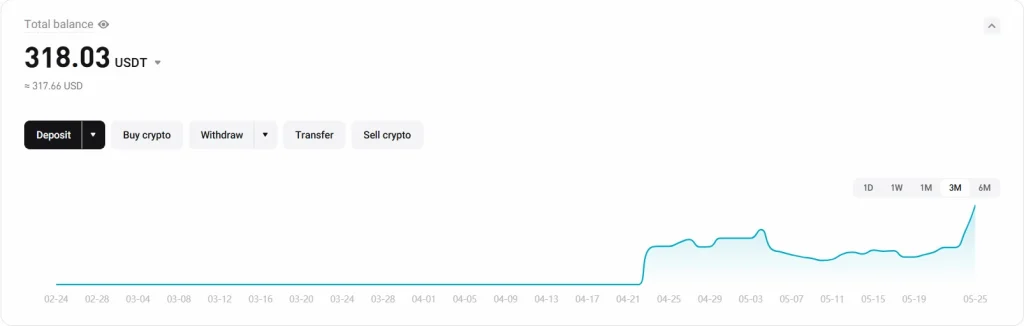
| Current total balance | 318.03 USDT |
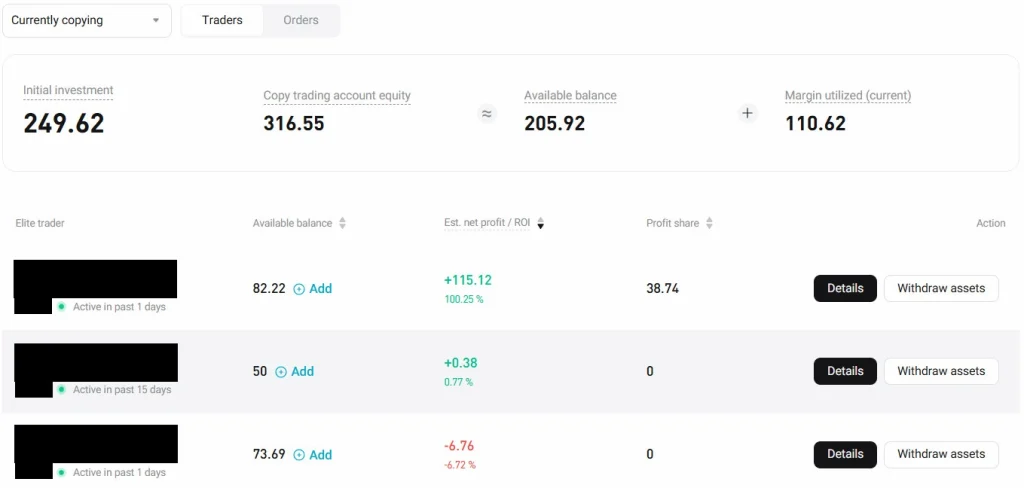
| Current copy trading initial investment | 249.62 USDT |
| Current copy trading account equity | 316.55 USDT |
Short version: despite losing 41 USDT in the first two attempts, the overall position is positive. More importantly, the process of losing that money led to a clearer approach that actually fits the goal.
Copy trading carries risk of loss. This is a personal experience record only and does not constitute investment advice. Everyone’s situation is different — please understand the risks before making any decisions.
What 3 Months Actually Taught Me
Figure out what you want before you pick a trader
This is the main thing. It doesn’t matter how good a trader’s historical return looks or how experienced their profile sounds — if their approach doesn’t match what you’re trying to do, the result probably won’t either. A strategy built for large capital and long holding periods doesn’t translate to small amounts and short timeframes, no matter how well it works in the right context.
“Wait a bit longer” is the most expensive thought
The first failure came down to waiting for a recovery that didn’t arrive. Copy trading isn’t a fixed deposit — a trader going sideways isn’t guaranteed to turn around. Deciding your exit conditions before you enter is much better than trying to figure it out while you’re losing.
Still figuring it out
The current approach isn’t finished. The timing on when to exit short-term traders is still being refined, and the long-term position needs more time to evaluate properly. But compared to blindly following recommendations at the start, there’s at least a clear logic behind the current setup.
I’ll update this when there’s something worth reporting.